Righteous Anger
June 2026 DCTB Monthly Mindfulness Tip

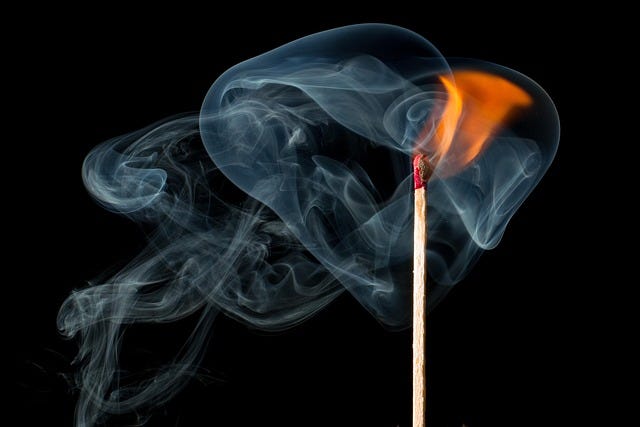
Righteous anger is intoxicating. It fuels us like no other emotion. We feel empowered by the sense of duty, of being correct, of needing to put others on the correct path. Taken to an extreme, it feeds the part of us that loves to hate. Righteous anger flashes through us like fire, igniting others in a conflagration – no matter if they agree or not, the fire spreads to all sides. Uncontrolled, it burns everything.
In our modern world, righteous anger is literally being capitalized and fed to us daily. Each headline building more and more outrage because that outrage translates into clicks. Every click in our attention economy generates a few more dollars for content creators and advertising (aka social media) platforms. The algorithms have taught us that anger and hate sell more than sex.
As Buddhist practitioners, we know righteous or not, anger is one of the poisons.
Does this mean as practitioners we are not allowed to be angry? Or that we should avoid all media and conversations that might spark anger? Some hear the word poison and vow to not drink the poison. But is that a vow that can actually be kept?
Even if we sequester ourselves in a cave, thoughts and emotions will continue to arise. Every emotion flows through all of us, practitioner and non-practitioner alike. To deny that we experience a particular emotion because we practice Buddhism is denial of reality itself.
While we cannot stop the hurricane of emotions from impacting us, we can sit with each one of them consciously. Everything is used on the path of Awakening, including the poisons.
When we observe anger being triggered within us, we do not turn away and we do not indulge in it. Instead we contemplate its existence. We make space for it and look deeply, holding ourselves and others with gentleness as we process what is happening. This can take place within the moment of a single breath or over a lifetime.
We discover the anger of the body is different than the anger of the mind.
The anger of the mind is rooted in attachment … it rises when things do not go the way we wanted. That can mean we encounter something unexpected, or the plans we made fall apart, or we cling to something that has changed in our personal life or in the entire world.
The anger of the body is a warning message. The body is telling us something needs attention, right now. It spurs us to spontaneous action. This is true righteous anger. It demands we act in accordance with the highest dharma to the best of our capability.
With anger of the body, we are inspired to respond with right action. This means our body does what needs to be done without attachment and without feeling like we are the doer. We know in the depths of our being this is the correct thing to do. No doubt, no question, no thought. Sometimes right action means to be still. Sometimes it means to move or to speak. It all depends on what is required in that moment. If we are fully present, dharmic action flows through us with ease.
In that moment, we know the anger and the response is not about us personally. Like a mother yelling at a toddler about to run into the street, this righteous anger is pure love born of concern for well-being.
If we are lax in our mindfulness practice, we miss the moment of action. We feel the anger of the body but it becomes stifled.
When this happens, the anger can remain in the body. We feel it as tightness or exhaustion or stomach acid or general malaise. If we attend to the body with gentleness, and we do what needs to be done now, we relieve the stress on the body. The energy of anger passes quickly even though we missed the initial time to act.
But if the mind highjacks the anger of the body we can easily fall into a vat of poison. We can believe we are being righteous when we are actually hooked by an attachment.
When the mind seizes the anger of the body, there is a mental response. Everything slows down. There are layers of emotion. There are thoughts. There is a story. We weigh our options to find what might benefit us the most. We become enmeshed in trying to give the story an ending suitable to what we think is right. More than anything, we want to be right. In short, we become caught in the net of desire and attachment.
We can still use this experience to grow. Noticing the anger (righteous or not) or any disturbing emotion is an opportunity to connect with Buddha-nature. The key is to contemplate and stay present with whatever arises.
When we notice repulsion in response to an emotion, we can examine the root of that repulsion. What is keeping us from accepting that we are feeling this emotion?
When we notice attraction to a certain emotion, like the sweet and sour taste of righteous anger past the moment of action, we can look deeply into the root of that attraction. What is pulling us into indulging in that emotion?
By approaching these questions with curiosity and humility, we discover what is beneath the attachments: pure and perfect Light.
It is easy to get lost in this world. We gather at Dharma Center of Trikaya Buddhism both in person and online to remind each other of the beauty and power of the Path.
We hope you will join us in our quest to illuminate this world, one moment at a time.
Visit our website: DharmaCenter.com to learn more.
You can discover more of my posts and books at my website: TuriyaDhara.com